

DevotionalDay trip · Dr. B.R. Ambedkar Konaseema
Draksharamam
ద్రాక్షారామం
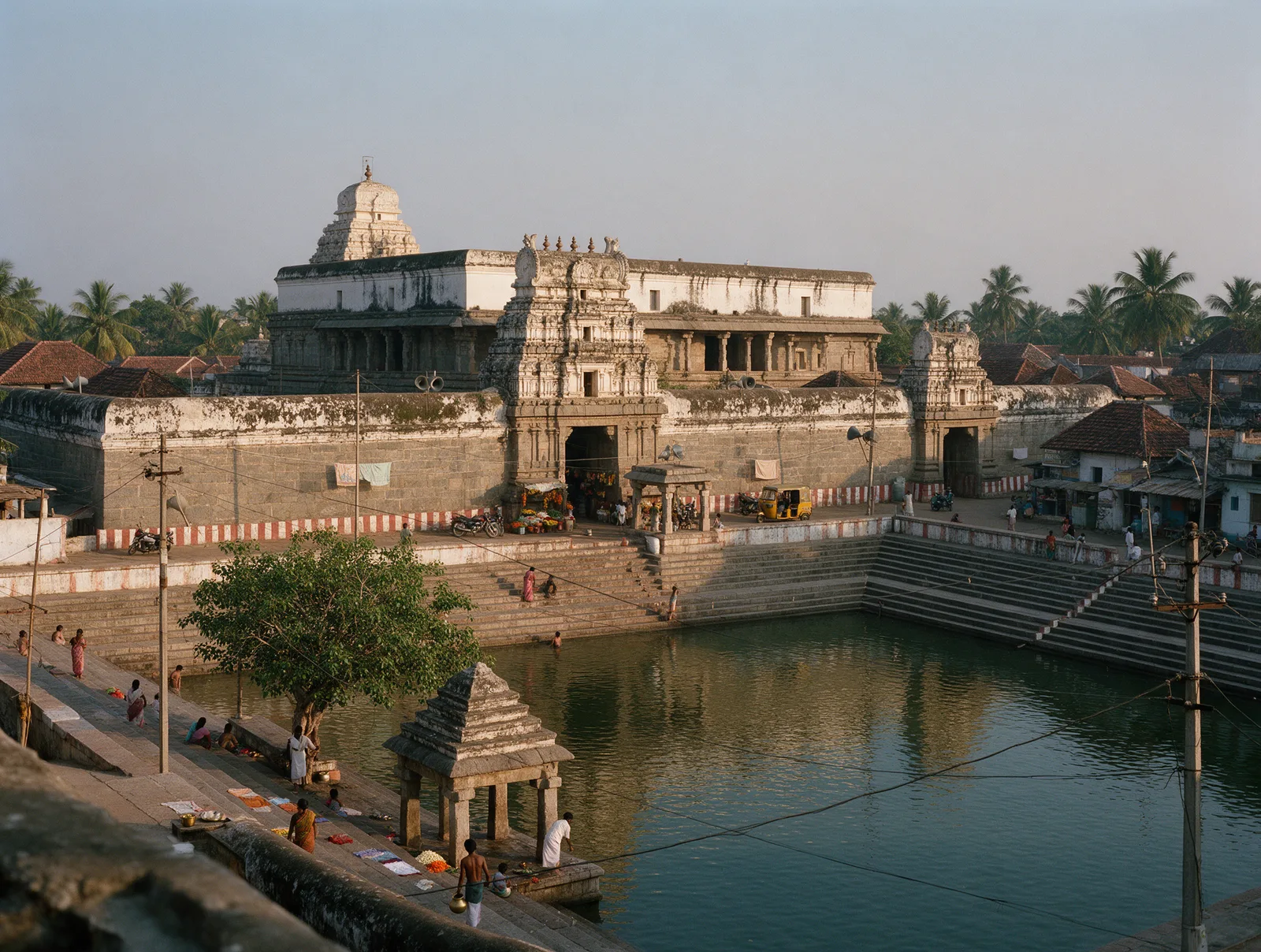
Bhimeswara’s two-storey shrine, Manikyamba’s Shakti Peetha and the Sapta Godavari tank.
16.7929° N
82.0634° E
- Distance
- About 44 kmby road from Rajamahendravaram
- Best time
- October to March, early morning; Karthika Mondays and Maha Shivaratri are the main festival days
- Time to spend
- About 2 hours
- District
- Dr. B.R. Ambedkar Konaseema districtRamachandrapuram mandal
- Timings
- 6 am to 12 noon and 3 pm to 8 pm (AP Tourism; hours may change on festival days)
About Draksharamam
Draksharamam is a small town near Ramachandrapuram. Its Bhimeswara Swamy temple is one of the five Pancharama shrines of Shiva in Andhra Pradesh. The same complex has the shrine of the goddess Manikyamba, one of the 18 Maha Shakti Peethas, so the god and the goddess are honoured side by side. The town takes its name from Daksha, Sati’s father, whose sacrifice is said to have been held here.
Tradition credits the temple to the Eastern Chalukya king Bhima I, who ruled in the late ninth and early tenth centuries. The Archaeological Survey of India protects it. Compound walls with gateways on all four sides surround a shrine built on two levels. The crystal linga rises through both, so you see its base on the ground floor and its top from the upper floor. Later dynasties, among them the Cholas, Eastern Gangas, Kakatiyas and Vijayanagara kings, supported the temple, and several hundred inscriptions survive on its walls. Water for worship comes from the Sapta Godavari tank.
Highlights
- The crystal Bhimeswara linga, seen from both the ground and upper floors
- Goddess Manikyamba’s shrine, one of the 18 Maha Shakti Peethas
- Pillared two-storey cloister around the inner courtyard
- Centuries-old inscriptions carved into the temple walls
- The Sapta Godavari tank, whose water is used in temple rituals
Good to know
- Climb the steps to the upper level to see the top of the linga, then see its base below.
- Dress modestly and leave your footwear outside before you go in.
- Karthika Mondays (around November) and Maha Shivaratri are the main festival days, so expect crowds and arrive early.
Keep exploring
Nearby places
 Devotional50 kmకోటిపల్లి
Kotipalli
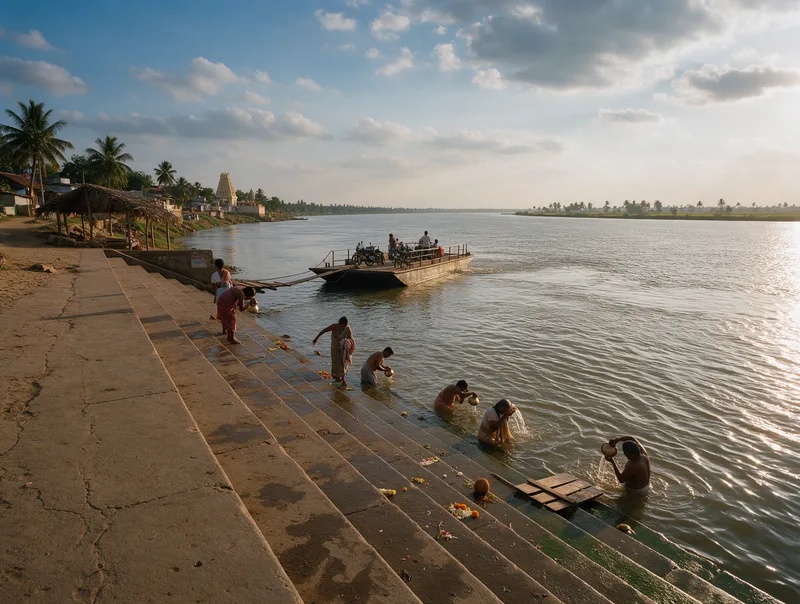
Twin Shiva lingas and a holy bath on the Gautami’s bank.Day trip · Dr. B.R. Ambedkar Konaseema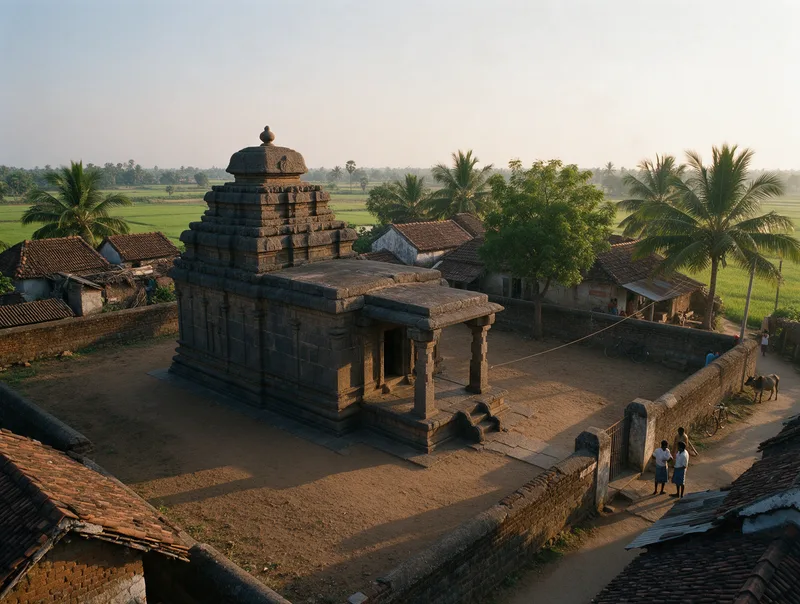 Heritage40 kmబిక్కవోలు
Biccavolu
Ninth- and tenth-century Eastern Chalukya shrines among village lanes and fields.East Godavari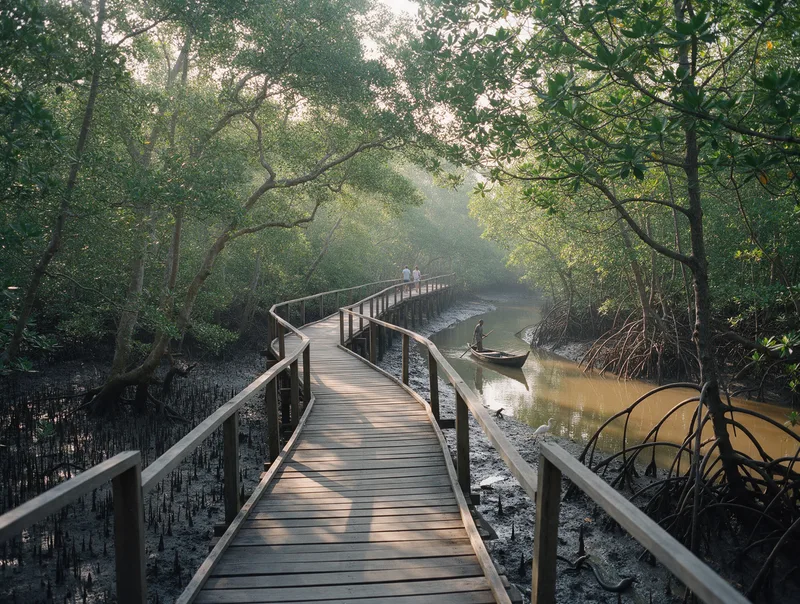 Coast & delta72 kmకోరింగ
Coringa mangroves
A boardwalk, a watch tower and boat rides through the Godavari delta’s mangroves.Day trip · Kakinada