

DevotionalEast Godavari
Kovvur
కొవ్వూరు
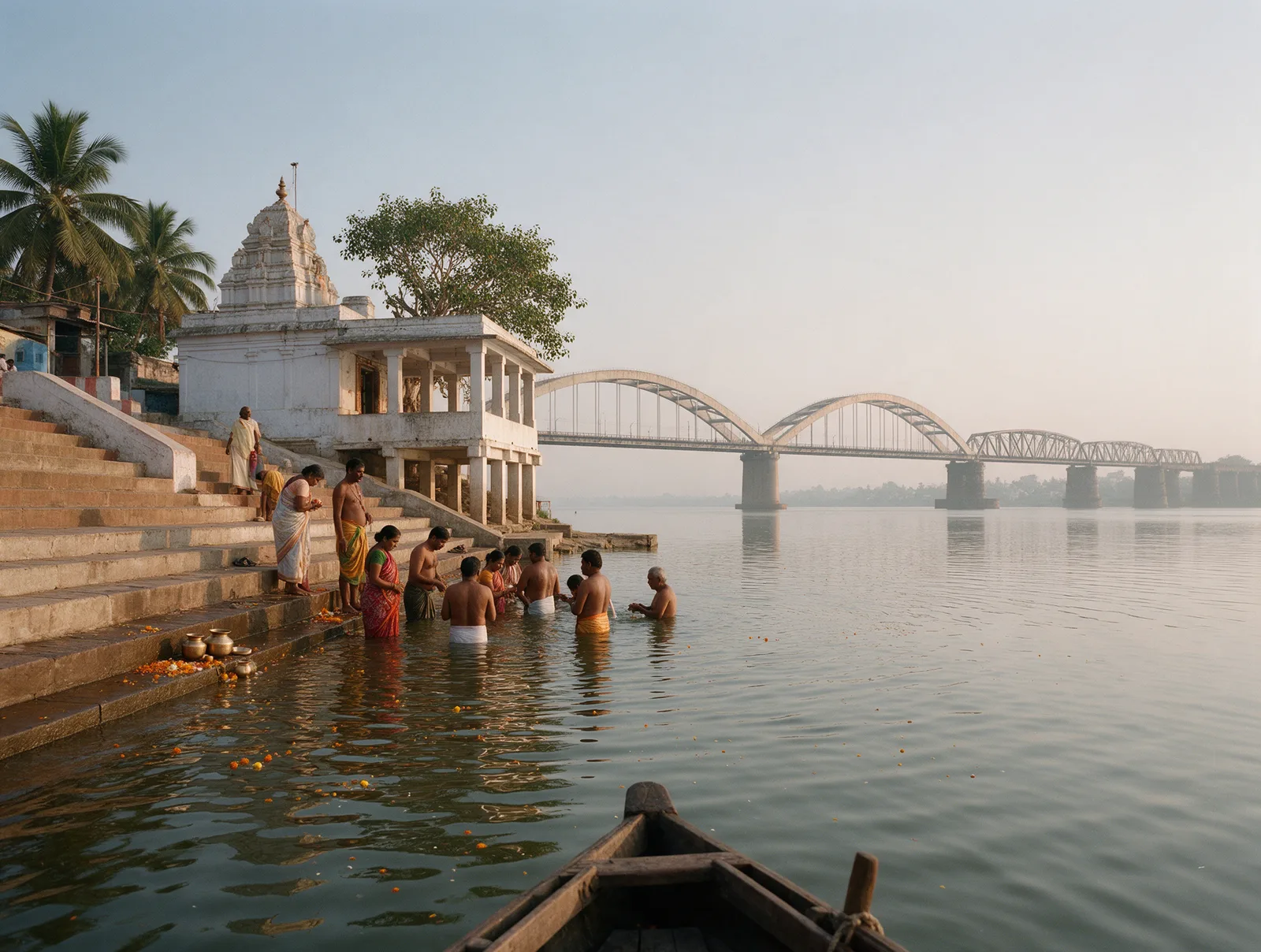
The Godavari ghat of Sage Gautama’s legend, facing Rajamahendravaram.
17.0161° N
81.7378° E
- Distance
- About 8 kmby road from Rajamahendravaram
- Best time
- October to March; early morning
- Time to spend
- 1 to 2 hours
- District
- East Godavari districtKovvur mandal
About Kovvur

Kovvur sits on the west bank of the Godavari, across the river from Rajamahendravaram. Its main bathing ghat is called Goshpada Kshetram. Goshpada means a cow’s hoofprint, and the town’s old name, Govuru, also points to cows. Local tradition says Sage Gautama meditated on this bank. In the legend, a cow strayed into his fields and died when he drove it away. To wash away that sin he prayed to Shiva, who released the Ganga. The river he brought down became the Godavari, also called Gautami after him.
Beside the ghat stands the shrine of Sundareswara Swamy with Bala Tripura Sundari. Pilgrims come to bathe and pray. Crowds swell during the Godavari Pushkaralu, held once every 12 years, when many families also offer rites for their ancestors. The next Pushkaralu run from 26 June to 7 July 2027, and new ghat works are planned along the Kovvur riverfront. On a quiet morning it is a simple place to sit by the river and look across at the city.
Highlights
- A morning dip or a quiet sit at Kovvur’s main bathing ghat
- Sundareswara Swamy and Bala Tripura Sundari temple beside the ghat
- The Sage Gautama and cow legend behind the name Goshpada
- Wide views across the Godavari to Rajamahendravaram on the east bank
Good to know
- Dress modestly and leave footwear outside the shrines.
- Stay out of the water when the Godavari is in flood during the monsoon.
- Expect very large crowds during the Pushkaralu, 26 June to 7 July 2027.
Keep exploring
Nearby places
 HeritageIn the cityగోదావరి వంతెనలు
The three bridges
Havelock in 1900, road-cum-rail in 1974, the arches of 1997. Best from the ghats at dusk.East Godavari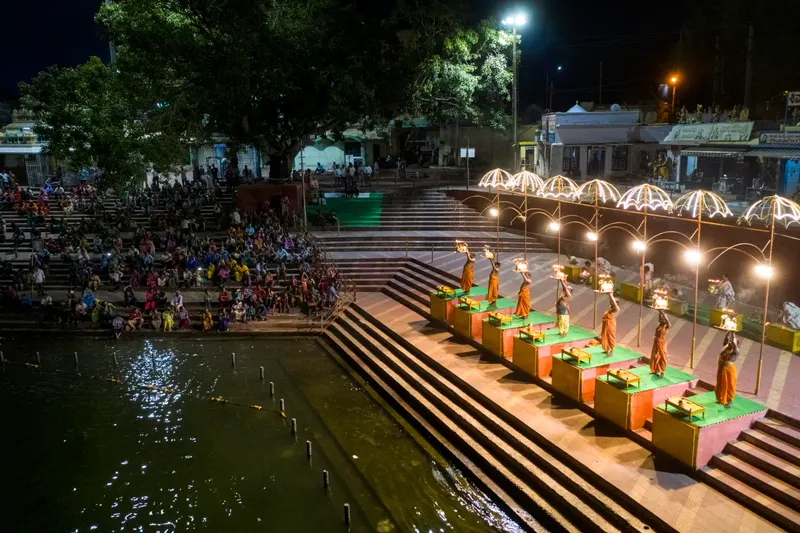 River & natureIn the cityపుష్కర ఘాట్
Pushkar Ghat
Lamps raised to the river after sundown, trains crossing the bridges behind.East Godavari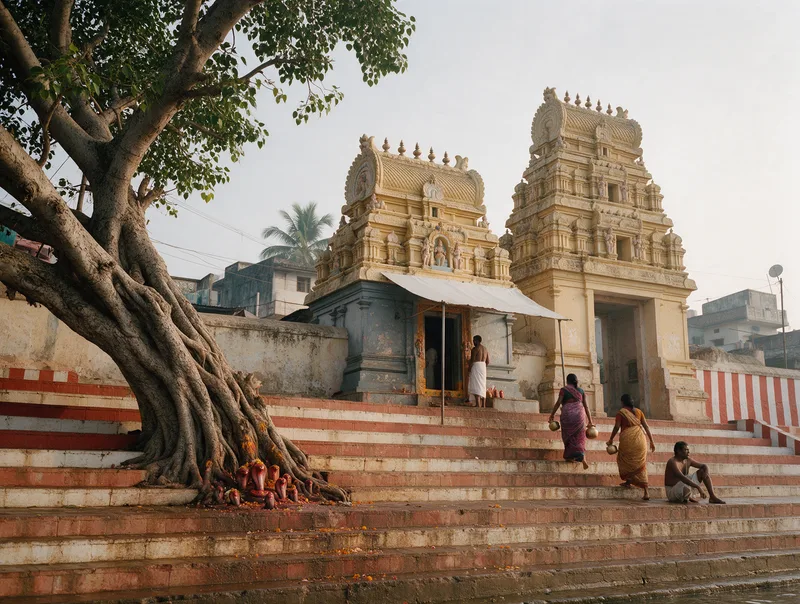 DevotionalIn the cityకోటిలింగేశ్వర
Kotilingeswara
A Shiva temple beside Kotilingala Revu, at the city’s northern riverfront.East Godavari